Welcome to the web pages of the Dynamics and Vibration Research Group. The work of the
group is directed at the many challenging dynamics and vibration problems associated with the design of
modern engineering structures and transportation systems; problems that are exacerbated by the constant drive
towards lighter weight structures, more powerful propulsion systems, and more stringent specifications
regarding permitted levels of noise and vibration. Ongoing work covers most industrial sectors, and ranges
from long term fundamental research to shorter term applied research aimed at a specific industrial need.
Current research themes include
- Noise and vibration in automotive, marine and aerospace vehicles
- Transportation mechanics
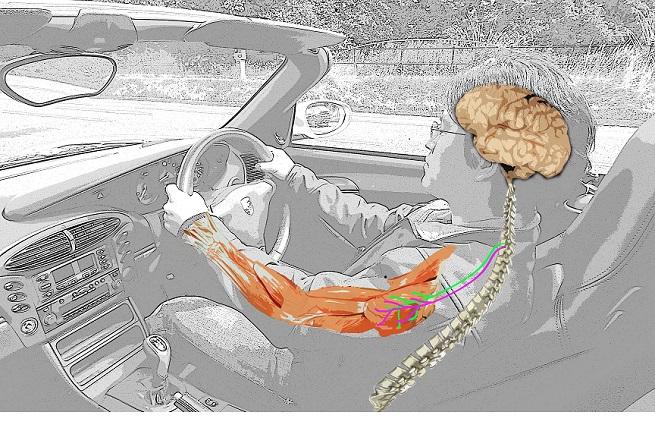
- Driver-vehicle dynamics
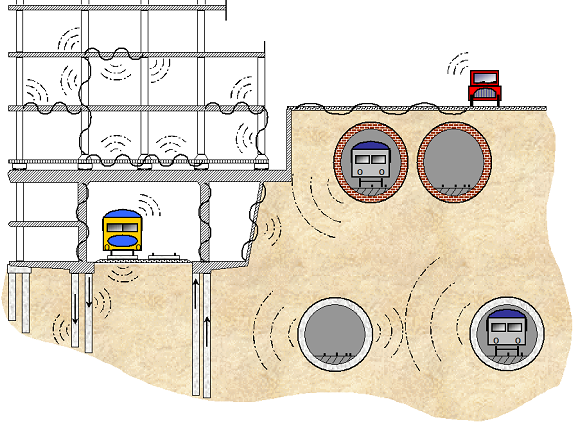
- Ground borne vibrations and transmission into buildings
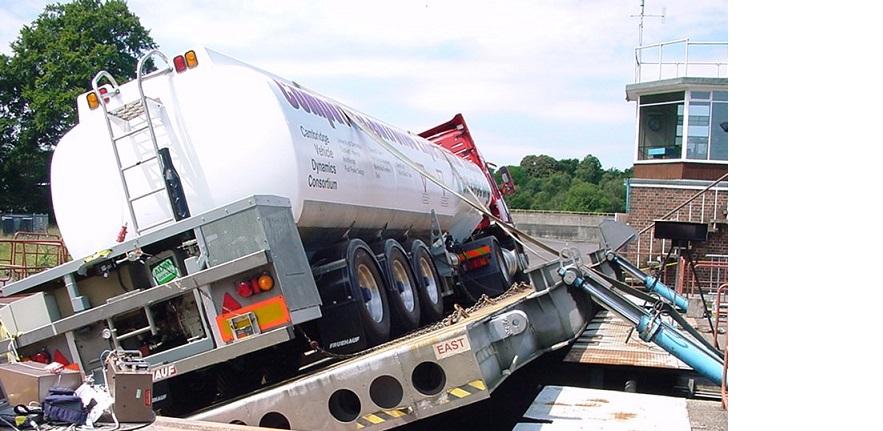
- Impact dynamics
- Fault identification
- Signal processing and wavelet analysis
- Musical acoustics
The group has access to extensive computational and experimental facilities, and we have close links with
industry and other academic and research institutions. The web pages contain details of the group members,
our research portfolio, our seminar series, and current vacancies. Enquiries are always welcome regarding our
present work or potential new research projects.
 |
|
The earliest experimental technique to visualise patterns of
vibration is the "Chladni figure", on which our logo is based. Ernst Chladni (1756-1827) first published his
method in 1787: he excited a plate into vibration with a violin bow, and sprinkled sand on the surface. The
sand gathered at the nodal lines, revealing the vibration pattern. By the time he published his famous book
in 1809, Chladni had used this method to study vibration of plates of many shapes, and these results were
important in validating the theoretical models for plate vibration which were developed during the nineteenth
century. Chladni figures are still a useful experimental technique today, but it is now easier to create them
using sinusoidal excitation so that the frequency can be controlled directly. |